Professor Shankar Subramaniam
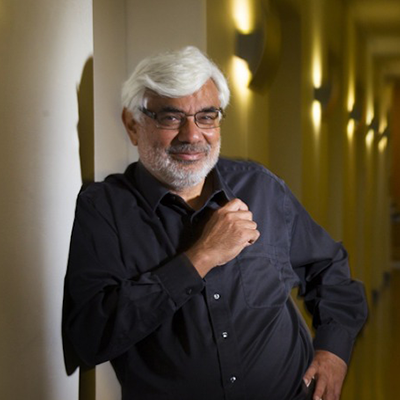
Professor Shankar Subramaniam
Jacobs School of Engineering
University of California San Diego
Neuronal Reprogramming Pathways in Alzheimer's Disease
Abstract
Metrics of cognition, such as dementia, provide the first clues to neurodegenerative disorders like Alzheimer's disease. What are the early events that presage the onset of dementia? How is the brain reprogrammed in Alzheimer's disease? Is there a hope of reversing Alzheimer's disease? Do other neurodegenerative diseases like Parkinson's and Huntington's show similar reprogramming? Do mechanisms of reprogramming offer a strategy for drug screening? Can we develop human brain models for AD? This talk will address these issues from molecular and cellular perspectives. Using multiomics measurements on human brain model systems, namely, iPSC-derived neurons and cortical organoids from non-demented control and AD patients, we demonstrate that dedifferentiation, loss of neuronal identity, and loss of synaptic machinery are hallmark endotypes of AD, and hence, drugs targeting plaques and tangles are unable to address the root causes of the pathology. We also show the causative factors of neuronal state change and offer insights into potential therapeutic routes.