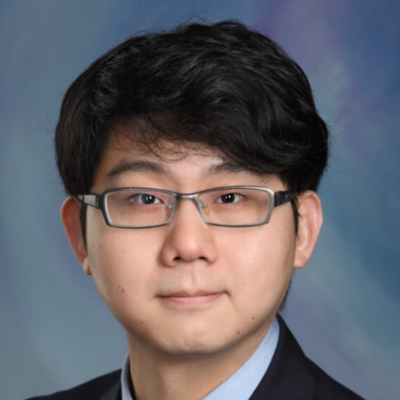
Professor Jia Liu
Soft and Flexible Brain-Computer Interfaces and NeuroAI
Abstract
Understanding brain function through large-scale brain-computer interfaces (BCIs) is essential for deciphering neural dynamics, treating neurological disorders, and developing advanced neuroprosthetics. A grand challenge in this field is to achieve simultaneous, large-scale, stable recording of neural activity with single-cell resolution, millisecond precision, and cell-type specificity across three-dimensional brain tissue throughout development, learning, and aging. In this talk, I will introduce a suite of soft and flexible bioelectronic technologies engineered to meet this challenge and enable the development of NeuroAI systems inspired by biological intelligence. First, I will present tissue-like bioelectronics, capable of tracking the activity of individual neurons in behaving animals across their entire adult life. I will address the electrochemical limitations of soft materials and share our strategies to overcome them, establishing a scalable platform for large-scale, stable, and long-term brain mapping compatible with human clinical applications. Next, I will discuss the creation of cyborg organisms by integrating stretchable mesh-like electrode arrays into two-dimensional sheets of stem or progenitor cells, which undergo 2D-to-3D morphogenesis to form brain organoids or embryonic brains. This enables continuous three-dimensional electrophysiological recording during development. I will then highlight how the brain's dynamic nature - and the challenge of capturing neural changes over time - can be addressed using our stable electronics to decode neural representational drift. These platforms support long-term, adaptive neural decoding and facilitate integration with neuromorphic algorithms for real-time interpretation of intrinsic neural dynamics. Building on this, I will introduce DriftNet, a deep neural network framework inspired by neural dynamics. DriftNet mitigates catastrophic forgetting, outperforming conventional and state-of-the-art lifelong learning models and equipping large language models with cost-effective, NeuroAI-driven lifelong learning capabilities. Finally, I will present our latest efforts integrating three-dimensional single-cell spatial transcriptomics, electrophysiology, and agentic AI to map brain activity with cell-type specificity. I will conclude by outlining a future vision where soft electronics, spatial omics, and AI agents converge to construct a comprehensive brain cell functional atlas, transforming next-generation BCI and NeuroAI applications.